Preschool Science

From LoveToKnow Kids

Preschool science should be fun, informal and full of opportunities for the young child to learn about the world around her. Even before a child begins reading on her own, there are many ways to help her start to learn science. Parents can read to a child, or conduct simple experiments to show concepts. Science covers a broad range of interests and during preschool, typically between the ages of 3-5, your child should absorb as much of this information as possible in broad concepts about the way the world and science work.

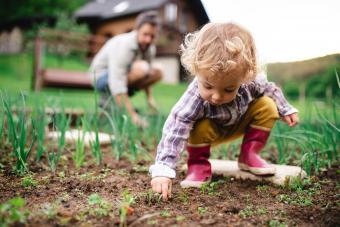
Backyard gardening is a great way to show kids the growth cycle of plants.

Make Preschool Science Fun

Science covers many different topics from weather, to backyard critters, to plants, to astronomy, to light and matter, to electricity, and so many more areas of study. Preschool science presents the special challenges of being made interesting and on a proper learning level for the younger child. Remember that at this age you want to present broad concepts, but at the same time try to teach the child that science is fun!

Ideas for teaching preschool science include:

  • Hula Hoop Science—Place a hula hoop on a spot of grass in your backyard and have your preschooler get down on his stomach and observe what is going on inside that hula hoop. What types of plants grow inside the hoop? What insects live there? What might be going on under the ground (moles or worms)? How do all these plants and animals relate to one another? Ask the child how things might change if it started to rain very hard. This will get the child thinking about the world around him.
  • Science Museums and Centers—Many cities offer science centers geared to help children learn more about science. In addition to hands-on presentations, there are often rotating exhibits so that preschoolers learn different concepts with each visit.
  • Planetariums—Most universities offer a planetarium that is often open to the public. This is a fun and informative way to study the night skies with your children from a young age. Introduce him to the mysteries of the universe at a young age, and he'll likely maintain an interest for years to come.
  • Kitchen Science—Simple experiments in the kitchen can help preschoolers begin to understand basic science concepts. Sites such as the Exploratorium or Zoom Kitchen Chemistry offer many ideas for exploring various concepts using supplies you probably already have on hand in your kitchen.
  • Plants—Since preschool science is best taught from the child's own observations and questions, try planting a seed into a small Styrofoam cup. Have the child plant the seed, water the seed and make sure the seed gets sunlight. Keep explanations simple, such as: "The flower needs sunlight to grow but it also needs water". When the plant grows larger, you can move it outdoors or plant in a larger pot. Beans are great for this as they sprout quickly, and many kids enjoy growing mini lawns or flowers such as marigolds.
  • Metamorphosis—Butterflies are one of the most amazing creatures in our world. Preschoolers will be interested in how they change from a caterpillar, weave a cocoon, turn to goo and emerge as a beautiful butterfly. Observing the butterfly opens many opportunities for discussion about this science concept.
  • Games—Science can also be taught using a variety of fun games that will engage the preschooler's senses. Use some of the new sidewalk paint to show children how colors mix together and how adding a light color can lighten a dark color or how blue and yellow make green.

You can find lessons and ideas for further games at the following websites:


Comment on Preschool Science


(Displayed with your comment)                        (Will not be displayed)
Verification Code:   
    

Kids Categories
LoveToKnow Tools